How we used affinity mapping
For our project on sharing of menstrual products and knowledge, we used affinity mapping in two contexts:
- We interviewed a group of women about their experiences around the menstruation. After combining our interview notes, we created sticky notes containing single units of info that we then classified with affinity mapping.
- We used lateral-divergent techniques to create ideas that we used affinity mapping to refine.
Interviews to sticky notes
As part of our interviews, we asked participants questions in three categories:
- their first experience with menstruation
- their routine experience
- their practices and opinions on sharing
We considered each category as a whole instead of recording each question separately. We were then able to reanalyze the answers to create individual points, which we represented as sticky notes in Miro. We tagged the sticky notes with profiles of the participants they came from. We later added data from conversations with relevant institutions.
These sticky notes would be moved, copied, sorted and edited through many exercises.
Classification: Affinity mapping for analysis
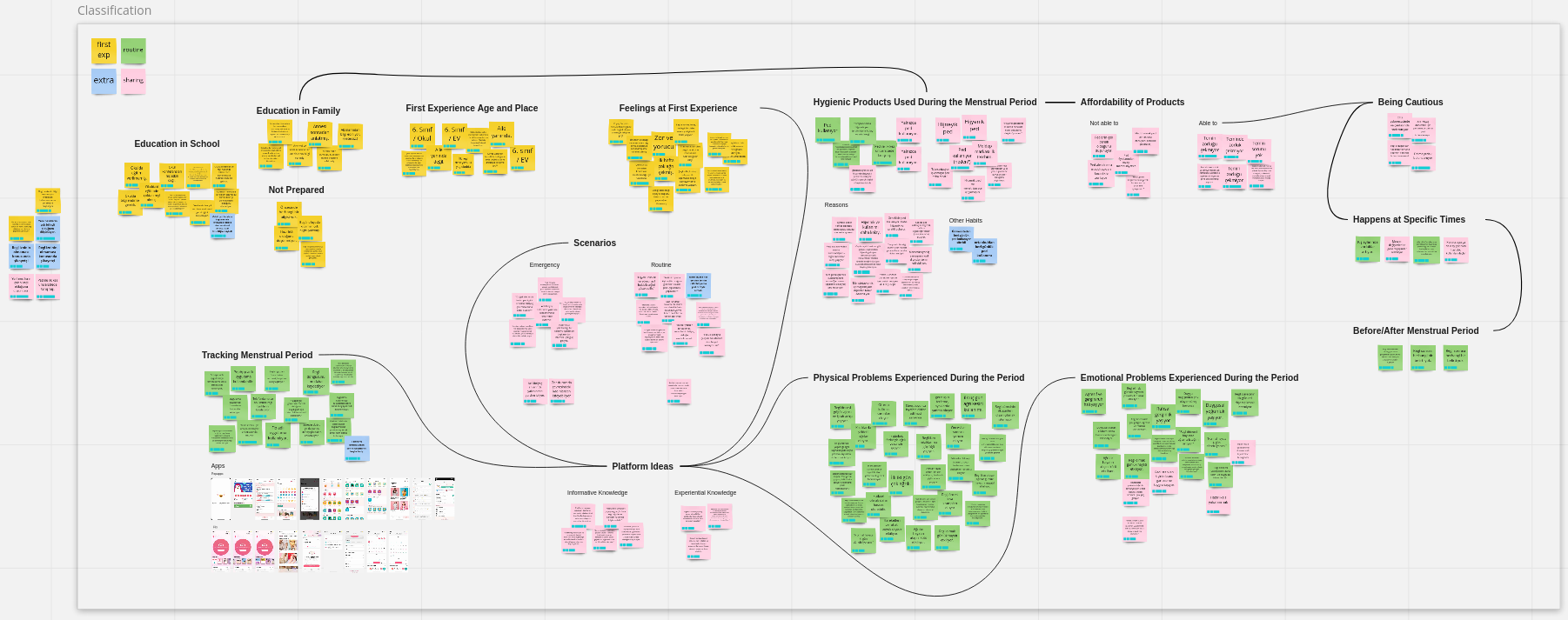
Classification allowed us to view points by what they actually relate to, instead of based on when the participant mentioned them. It was a mostly uncoordinated process of spotting patterns and refining. We grouped notes together first, and labeled the groups afterwards. There was overlap between the stages however, and the board was always open to changes.
Affinity mapping of ideas
We used Brainwriting and "Yes, And" to generate a large number of ideas. I want to discuss how we applied these techniques in another post. What matters for now is that we had yet another batch of sticky notes.
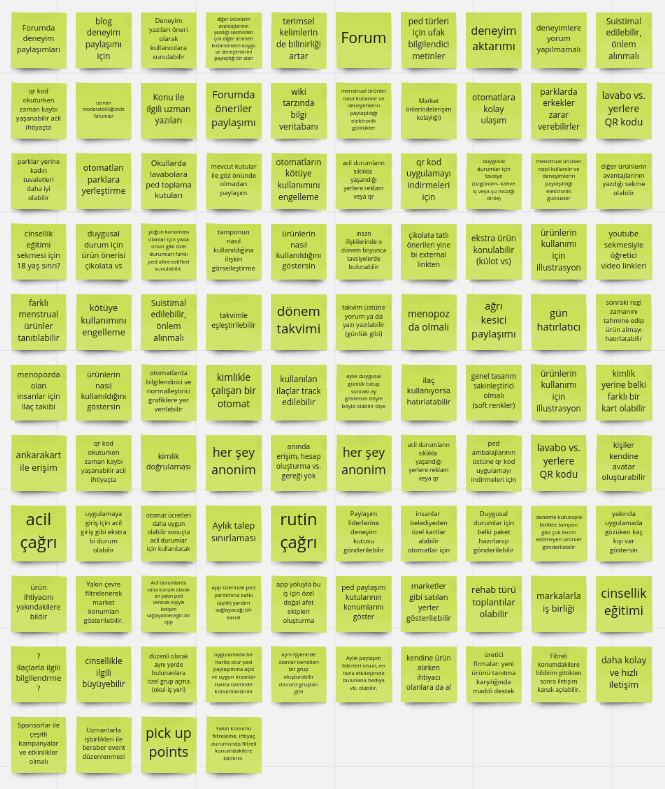
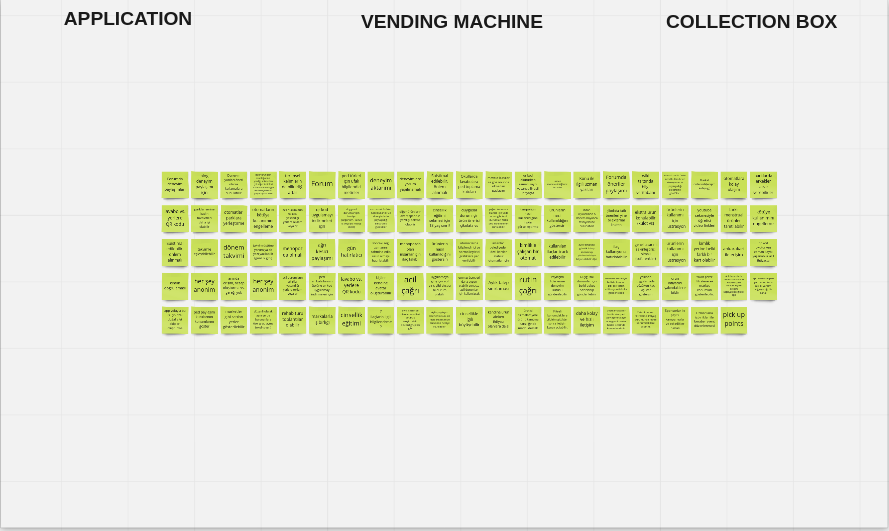
We used the affinity mapping technique again to sort these ideas. One change is that we wrote down three large headings beforehand. These reflected general directions that had been floating around in the group before the ideation phase.
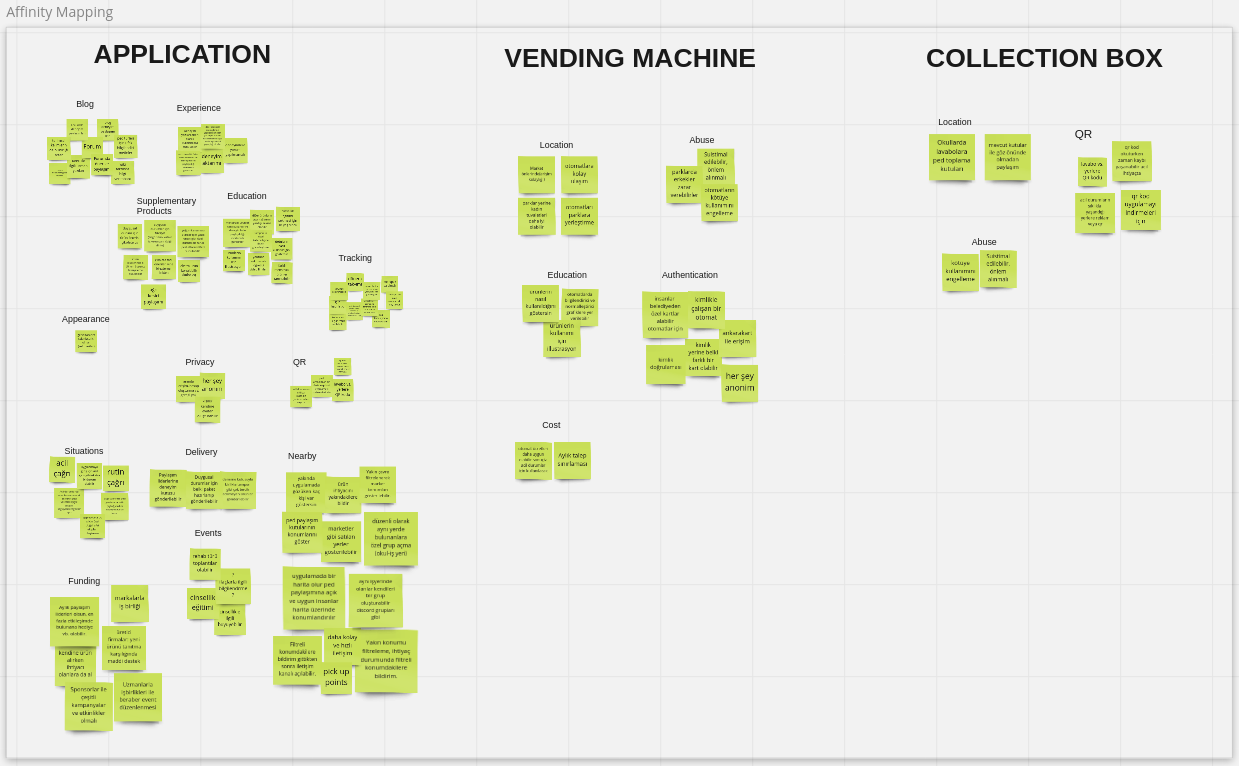
As we were sorting the ideas same as before, we noticed several that fit under more than one heading. We simply duplicated these.
What now?
Using affinity mapping on interview data helped us get a bird's eye view on each topic we had set out to learn about. It made the interview data much more accessible and easier to draw conclusions from, as opposed to the wall of text it was before.
Aside from being an opportunity for introspection, affinity mapping on our idea notes could be useful for future activities like SCAMPER and dot voting. I will reflect on this in an upcoming post.